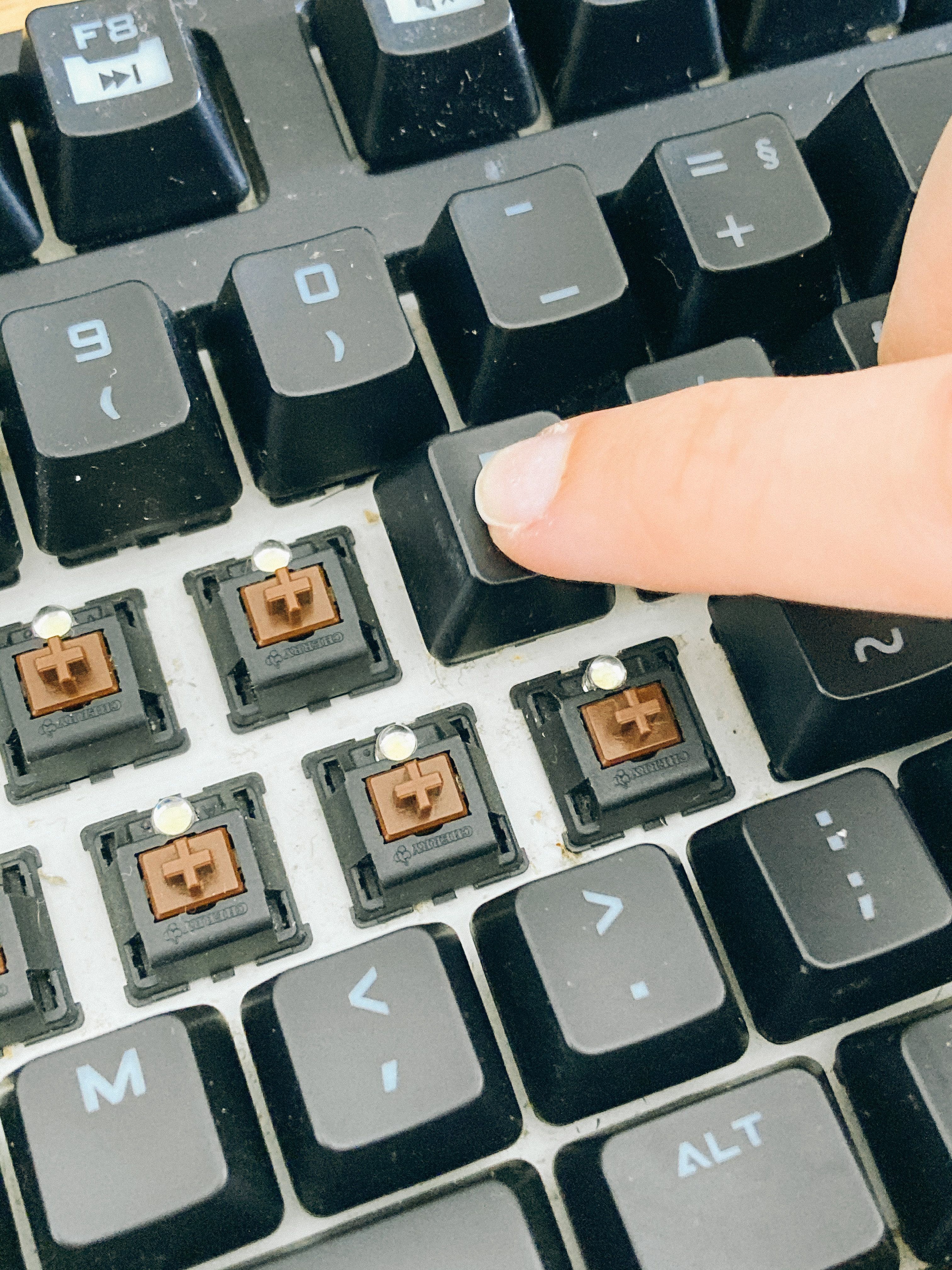
Title: When a Keyboard Key Turns Your Browser into a Slide Show: A Practical Guide to Identifying and Fixing a Firefox/Linux Keyboard Quirk
In the wild world of desktop Linux, browser quirks can feel like gremlins in the machine. A single misplaced key, a stray keystroke, or a tiny hardware hiccup can cascade into UX disruption—such as a browser refreshing every time you press a specific key. This article takes you through a concrete, troubleshooting-minded approach to diagnosing and resolving an issue where a particular key (for example, the key between R and Y on a standard QWERTY layout) starts refreshing a browser or triggering unexpected browser behavior. It uses a realistic, reader-friendly frame, but it’s grounded in practical steps you can implement today.
Central idea: A stray keystroke, a single function key, or even a hardware contingency can masquerade as a software bug. The goal is to separate cause from effect: determine whether the problem lies with the browser, the window manager, a system-wide keyboard shortcut, a hardware fault, or a combination of these. Once the root cause is identified, applying a targeted fix is often straightforward.
1) Establish the pattern: What exactly is happening?
– Symptoms to observe:
– A specific keystroke or sequence (for example, pressing the key between R and Y on a QWERTY keyboard) triggers a browser refresh or other unusual behavior.
– The effect is reproducible in the same application (e.g., Firefox or Chromium) but not in other programs (e.g., a text editor like Leafpad).
– The issue is limited to a USB-connected keyboard; the notebook’s built-in keyboard may function normally.
– Questions to ask:
– Does the behavior occur in all tabs and windows or only in particular ones?
– Do other keys with similar shapes or placements cause the same problem?
– Does the problem persist across different browsers, or does it appear in a single application?
The pattern itself matters because it hints at where to look next: a browser-specific shortcut, a global OS shortcut, or a hardware mapping issue.
2) Rule out one of the most common culprits: browser shortcuts and hardware bindings
– Keyboard shortcuts can be both browser- and environment-specific. Some desktops or window managers define global shortcuts that intercept keys before the application sees them.
– In Linux, it’s common to have global shortcuts wired to function keys, media keys, or combinations that could inadvertently refresh a page (for example, F5 being the browser refresh trigger).
– Immediate steps:
– Test in a clean state: temporarily disable or re-map suspected global shortcuts. On many desktop environments, you can navigate to Settings > Keyboard or Shortcuts to:
– Disable the F5 key as a browser refresh trigger.
– Reassign or disable any shortcuts bound to the problematic key or to page navigation actions.
– Verify if the problem persists after disabling global shortcuts. If it goes away, you’ve likely identified a system-wide shortcut as the culprit.
3) Confirm whether the problem is hardware-related
– The Reddit-like scenario you described—spilling water and experiencing late-onset keyboard quirks—raises the possibility of hardware damage or a shifted key mapping caused by a sticky or malfunctioning key.
– Diagnostic steps:
– Compare behavior across keyboards. If the USB keyboard alone exhibits the problem while the notebook keyboard does not, hardware fault on the USB device is more plausible.
– Check for physical interception: sometimes liquid exposure can cause intermittent short circuits or key chatter (where pressing a key unregisters or duplicates inputs).
– Try a different USB port and a different USB keyboard to isolate the issue further.
– If hardware is implicated:
– Consider cleaning the keyboard or replacing it. Short-term workarounds include using an external keyboard or disabling problematic keys if the OS allows per-key remapping.
4) Examine software and configuration files for per-key remapping
– Per-key remapping can be implemented at various layers:
– X server key mappings (X11) or Wayland configurations.
– Desktop environment utilities or hotkey managers (e.g., GNOME Settings, KDE System Settings, Xfce Keyboard Settings, or third-party tools like xbindkeys).
– Terminal or shell-level remappings (less likely to cause browser-specific effects, but worth a quick check if you’ve customized input behavior).
– Practical steps:
– Inspect current keymaps:
– For X11: xmodmap -pke; xmodmap -preserved
– For Wayland: consult your compositor’s input settings or use the associated debug tools (Wayland lacks a universal xmodmap-equivalent; configuration is often done via the compositor or GNOME/KDE settings).
– Look for mappings that affect the problematic key or the keys around it (the key between R and Y is often labeled ‘T’ or nearby; but the exact key may vary by keyboard layout). If you find a mapping that could trigger a browser refresh, disable or reassign it.
– Temporarily reset keyboard settings to defaults to test: this helps determine if a custom mapping is the root cause.
5) Investigate application-specific behavior and configuration
– Some browsers allow you to customize or override shortcuts. In Firefox and Chromium-based browsers:
– Access the settings or about:config to review shortcuts and behaviors (various extensions can also bind keys, sometimes invisibly).
– Disable extensions one by one to see if one of them introduces a key-binding that triggers a refresh or page reload.
– If the refresh occurs only when a particular key is pressed and not with other browsers, you can suspect a browser-specific extension or setting rather than an OS-level shortcut.
6) If the problem is resolved by a simple, explicit fix, capture the exact action
– The Reddit example you provided concludes with a straightforward fix: disabling the F5 key, which is the browser’s standard page refresh trigger.
– This kind of crisp resolution is instructive because it demonstrates a precise, actionable intervention rather than a vague guideline.
– Takeaway: When you identify a single key as the problematic input, consider temporarily disabling that key’s effect in the environment rather than attempting to overhaul a wider system configuration. If the key is indispensable for other tasks, map it to a neutral action or a harmless modifier instead of suppressing it outright.
7) Practical recommendations for ongoing reliability
– Use a hardware check flow:
– If a USB keyboard shows anomalies, test with another keyboard and in another USB port to isolate the hardware layer.
– If possible, test the keyboard on a different machine to confirm whether the issue travels with the keyboard or is machine-specific.
– Maintain a minimal software baseline:
– Run a clean, minimal profile in the desktop environment to determine whether a background service or extension is contributing to the issue.
– When adopting new extensions or custom keybindings, document changes so you can roll them back quickly if problems arise.
– Consider long-term mitigations:
– If a given key is unused or rarely used, remap it to a neutral function to prevent accidental triggers.
– For workflow-critical keys, consider a hardware keyboard with better isolation or programmable firmware that allows per-key behavior without affecting system-wide shortcuts.
8) A closing reflection: what this teaches us about debugging complex UI hiccups
– The phenomenon underscores a core principle of reliable UX debugging: symptoms can be deceptive, and the actual cause often lies outside the most obvious layer.
– A browser refresh triggered by a key could be:
– A local hardware fault (key chatter or short).
– A per-key remapping or a global shortcut bound to that key.
– An extension or user-script inserting a custom key-binding.
– A compositor-level input handling nuance in the Linux desktop environment.
– The disciplined approach—observe pattern, isolate hardware vs software, test across environments, and apply targeted fixes—applies across many debugging scenarios, not just keyboard quirks.
Concrete, reader-ready takeaway
– If you’re facing a browser refreshing or the appearance of a stray keystroke that seems to originate from a particular key, run through a concise diagnostic sequence:
– Try another keyboard and different USB port to rule out hardware issues.
– Temporarily disable global shortcuts, especially function keys like F5.
– Check for and disable any browser extensions that might bind keys.
– If the issue persists, reset or reconfigure problematic mappings in your desktop environment or X11/Wayland session.
– As a last resort, reassign or disable the offender key’s function to prevent unintended browser behavior.
In the end, the elegance of debugging lies in clarity: replace the mystery with a verified cause-and-effect chain, then implement a precise fix. Whether you end up disabling F5, re-mapping a key, or replacing a hardware keyboard, you’ll have learned a robust, repeatable method for tackling similar issues in the future.
