Title: When Playtime Meets Reality: What a Kids’ Craft Project Teaches Us About Resilience, Technology, and Parenting
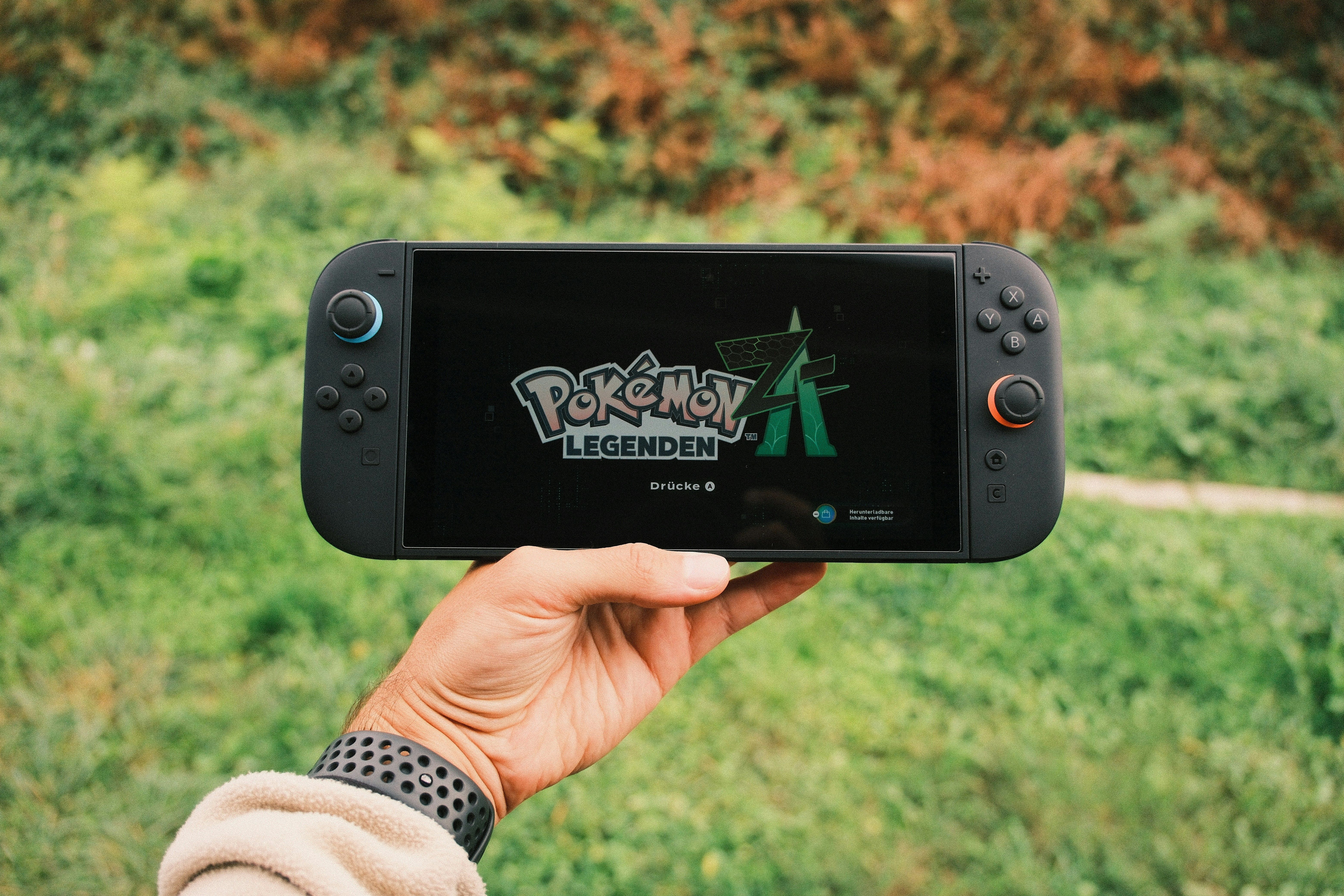
The impulse is familiar: after days of disrupted routines, a parent reaches for a brief moment of quiet, only to discover that quiet moment has evaporated into a miniature disaster scene. In a recent anecdote that pivoted from humor to hazard, a parent finds their iPhone 6s, tucked away beside a child’s toy, transformed into a far less innocent object by a child’s imaginative play—Rocky from a Paw Patrol figurine, apparently inspired to “become a Nintendo Switch.” The phone is now coated in wax and highlighter, refuses to power on, and the parent is left confronting a simple but surprisingly thorny question: what happens when a beloved device becomes collateral damage in a child’s creative exploration?
What this story illuminates beyond its immediate misfortune is a constellation of practical realities: the fragility of consumer devices in households with young children, the unpredictable dynamics of shared spaces, and the broader challenge of safeguarding technology while nurturing creativity. It’s also a case study in the kind of everyday innovation and improvisation that modern parenting often demands. Here, we can extract useful guidance by stepping back from the joke and asking what we can learn about device resilience, quick troubleshooting, and the delicate balance between letting children explore and protecting our valuables.
1) The risk landscape: household devices in the era of “everyday objects as playthings”
– Children’s playspaces increasingly overlap with our digital ecosystems. Phones, tablets, and small gadgets sit within arm’s reach of curious hands. Even the most carefully arranged living room can become a laboratory for experimentation, unintended experiments, and occasional accidents.
– Wax and highlighter: Both substances are common household items. Wax, particularly if present in crayons and candles or used for crafts, can behave like a stubborn glue, leaving residues that interfere with charging ports, speakers, microphones, and touch sensors. Highlighter ink can stain surfaces and, in some cases, seep into crevices. In this incident, the combined effects created a coating that the device could not recover from.
– The “design for kids” paradox: Some modern devices are designed with durability in mind, but most smartphones still rely on precision tolerances for charging connectors, screens, and internals. A kid-friendly, noise-immune play environment is wonderful for development, but it can also be perilous for delicate electronics.
2) Immediate, practical steps when a device won’t power on after exposure to crafts
– Safety first: If there’s any uncertainty about liquid exposure or residue near the battery or charging port, power the device down and disconnect any charging cables. Do not attempt to turn it on repeatedly if you suspect moisture or sticky residues around the port.
– Clean with care: A soft, lint-free cloth lightly moistened with isopropyl alcohol (preferably 70% or less) can be used to gently wipe the exterior. Avoid soaking the device or allowing liquid into openings. For stubborn residues near ports or speakers, a specialized electronics cleaning kit or a professional cleaning service is advisable.
– Inspect the ports: If the Lightning/USB-C port appears obstructed, a careful probe with a non-metallic tool (like a wooden toothpick or a dedicated opening tool) can help remove debris. Do not insert metal objects that could short or damage components.
– Consider internal damage: Wax can seep into tiny crevices and immobilize internal connectors or the logic board over time. If cleaning externally does not restore function, the problem may be internal, not just surface-level. In such cases, professional assessment is recommended.
3) What to do next: remedies that preserve value and safety
– Assess repair options: For a device as old as an iPhone 6s, weigh the cost of professional repair against the market value of the phone. If repairs exceed a meaningful percentage of replacement cost, consider whether upgrading might be prudent.
– Data protection: If the phone remains non-functional and contains valuable data (photos, messages, contacts), explore recovery options. If the device can be connected to a computer, data recovery software or professional data recovery services may salvage irreplaceable memories. If the phone is entirely non-functional, you may still be able to retrieve data from backups (iCloud, iTunes) on the new device.
– Future-proofing through discipline: Create a dedicated tech zone or tactile bin for electronics, away from craft materials. Establish “tech time” windows so children learn to play with age-appropriate toys in a way that doesn’t encroach on parents’ devices.
4) A broader framework: balancing creativity with custody of technology
– The education angle: Children learn through imitation and experimentation. Rather than stifling creativity, channel that impulse into constructive activities. Offer craft projects that are explicitly designed to coexist with electronics—e.g., build a cardboard “game console” or a printable-turned-physical accessory that mimics the look of a Nintendo Switch without risking real devices.
– The safety net: Keep a spare, inexpensive device or a dedicated “kid-friendly” tablet with simple, robust cases. This creates a clear boundary between child-driven play and devices that carry higher financial or sentimental value.
– The conversation: Use moments like this to teach a basic triage mindset: identify what happened, assess the risk and cost, and decide on an appropriate remediation. This fosters practical problem-solving in children while reinforcing the idea that care extends to shared belongings.
5) Real-world implications and lessons for households
– Durability under duress is uneven: Some devices are engineered to survive droppage or moisture better than others, but the fragility of ports and screens remains a universal constraint. When a household contains both high-value electronics and energetic children, the calculus often changes from “how to fix” to “how to prevent.”
– The economics of play: The Reddit anecdote underscores a recurring tension: the cost of keeping pace with technology versus the budget for repairs or replacements. This tension invites households to rethink ownership models—shared devices, age-appropriate tech, and budgeting for inevitable accidents as part of family lifecycle planning.
– Documentation and maintenance routines: Simple habits—regular backups, protective cases, screen protectors, and a scheduled monthly clean—can dramatically reduce risk and preserve the lifespan of devices that households rely on for communication, work, and learning.
6) Speculative foresight: what could shift this landscape in the next decade
– Materials science advances: More robust, self-healing coatings for electronics, or modular devices with replaceable ports and components, could minimise the impact of craft-induced damage.
– Child-friendly design norms: Manufacturers might introduce standardized “kid-safe modes” that limit access to sensitive ports or automate protective measures when heavy kid activity is detected around devices.
– Data sovereignty and family tech ecosystems: As families accumulate more data across devices, integrated family backup solutions and cross-device content management will become standard, reducing the heartbreak of data loss after accidents.
– Ethical considerations: A broader conversation about the environmental footprint of electronics, and how to repair or responsibly recycle devices damaged by household use, will increasingly influence consumer choices.
7) A concluding reflection: turning a mishap into a learning moment
The scenario—an iPhone 6s transformed by a child’s creative impulse into something resembling a Nintendo Switch—reads at first as a lighthearted misadventure. It is, in truth, a microcosm of contemporary domestic tech life. Parents must negotiate the tension between nurturing curiosity and preserving the tools that keep us connected. The immediate fix can be mechanical: clean, inspect, decide whether to repair or replace. The longer-term answer lies in design-minded tactics: establishing safe zones, choosing appropriate toys, and modeling a problem-solving posture that treats accidents as solvable, not catastrophic.
For readers wrestling with similar situations, the practical takeaway is threefold:
– Preventive layout: Create a distinct, tech-protected play area and designate a “tech-free” zone for crafts. Simple, proactive boundaries save both devices and nerves.
– Pragmatic triage: If a device is damaged, assess whether repair is cost-effective. Don’t assume it’s worth repairing by default; sometimes replacement offers greater value in the long run.
– Educational framing: Use incidents as teaching moments about care, responsibility, and creative exploration. Turn a chaotic spill into a conversation about how to pursue imaginative play without compromising technology.
In the end, a this-week-parent tale becomes a useful blueprint. It compels us to design spaces where imagination can flourish—where a child can dream up a “game console” out of cardboard without imperiling the family’s primary communications tool. And it reminds us that resilience—whether of a device, a household protocol, or a parent’s patience—is built not in flawless protection but in thoughtful response when the unexpected happens.
